
Your leaders know the frameworks. The harder skill is the judgment to use them under pressure.
I design and run workshops, facilitation, and advisory programs that develop how your leaders actually decide, relate, and act when the stakes are high. The performance that holds when the work gets complex.
A leadership team sits through a well-reviewed program. The scores come back strong. Three months later, the same senior leader is still avoiding the same conversation, still protecting the same stalled project, still reacting in the meeting that matters most.
Nothing was wrong with the content. The gap is somewhere else.
Organizations are full of people who know more than ever and still struggle to act well when the moment is ambiguous, fast, or emotionally charged. They have competency models and dashboards. They still misread their impact, defend sunk costs, and go quiet when candor is the job.
The next capability is judgment: the clarity to see a situation straight, the self-awareness to catch your own part in it, the read on the people in the room, and the call you make when there's no clean answer. Knowing the leadership model is one thing. Acting well in the moment that matters is another, and that one is trainable.
That's the work I do: building the judgment that turns the frameworks your leaders already know into the decisions and hard conversations they actually have to make.
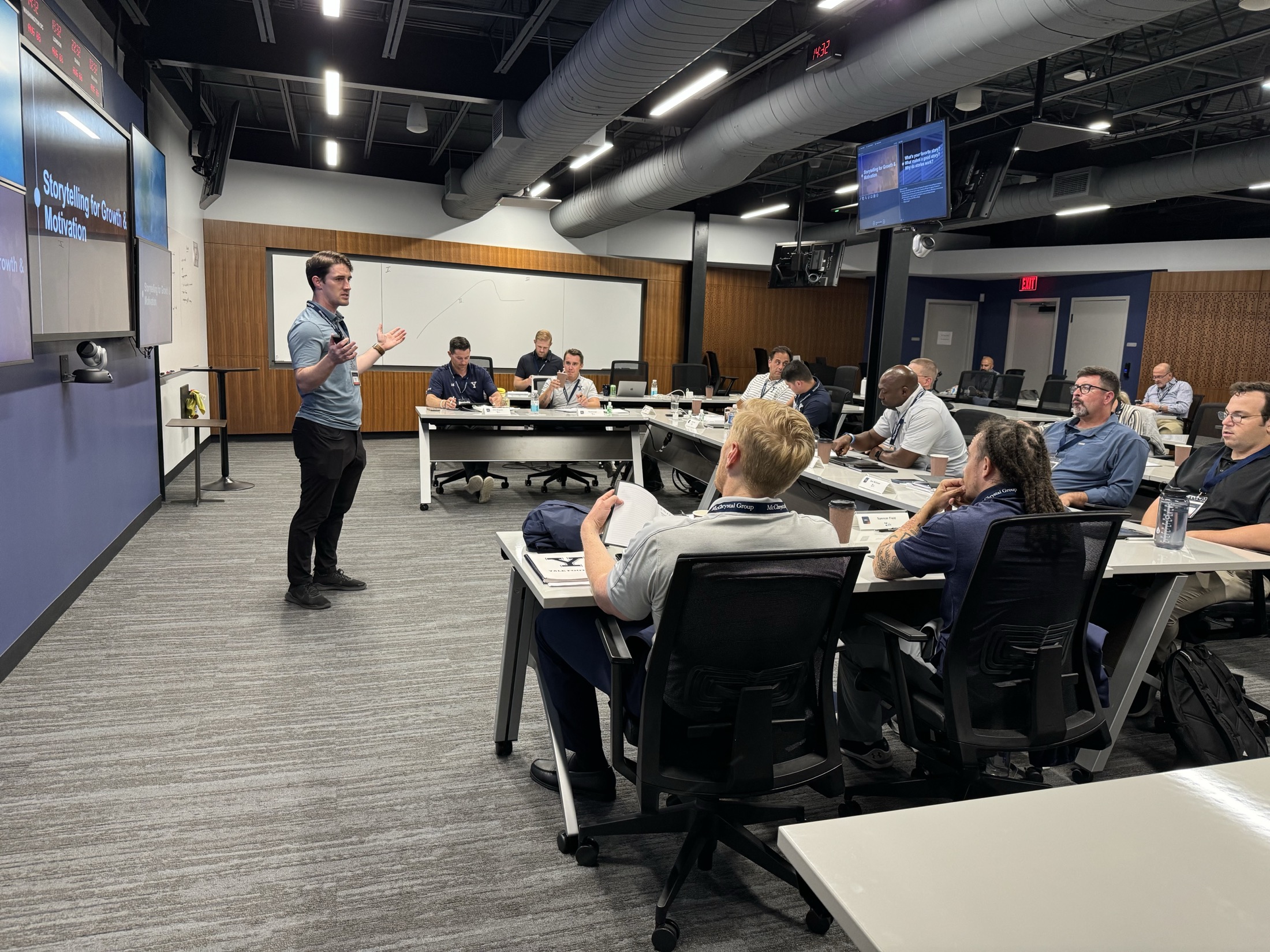
“Best eight hours of leadership training since my time in the military.”
Production leader, aerospace manufacturer
PhD-level behavioral science and a decade of leadership-development and coaching work with high-performing teams. Frameworks pressure-tested in the room with leaders carrying real decisions. And through Big Think, an ongoing line to the best current thinking in decision science, performance, and meaning.
The work lands best when there's a real problem on the table and the room to do something about it. That's where I'm most useful.
50+
client engagements across Fortune 50 healthcare, biopharma, emergency management, and higher education
92 NPS
on a frontline-leader program for a state agency
$1.6M
follow-on engagement across 16 sites after a single pilot landed





 Yale Football
 Florida Division of Emergency ManagementYale FootballFlorida Division of Emergency Management
“Having been in emergency management since the ’90s, this was the first course geared toward me as an Emergency Manager. It made me feel understood.”
Veteran emergency manager, state EM cohort
“A thoughtful and productive workshop. We achieved our goal of laying the groundwork to take our team to an even higher level.”
Program sponsor, biotech leadership team
“This is the first leadership training I’ve received since starting this role nearly a year ago, and already feel so much more equipped to lead my team. The simple to use, practical tools that I can take back to my team are going to help me solve an issue I’ve been avoiding for nearly a year.”
Program participant, frontline leader
What this looks like in the running of an actual team.
Every engagement I run closes one distance: where your team is today, and where it needs to be. Whatever gets you there is the program. Five moves, the same whether it's one leader or a whole function. The content changes with the team. The order doesn't.
-
01
Define the destination
First we get specific about what we're actually trying to accomplish. Not "better leadership." What would be different in six months, and how would we know? The test I use: success has to be something you could watch happen.
-
02
Diagnose where you are
You can't design the work until you know the ground you're standing on. Before I propose anything, I find out what's actually going on, which is usually not what the org chart says. I'd rather spend a week being wrong quietly than a quarter being wrong expensively.
-
03
Design the work
Then I build the thing that closes the gap, shaped by what the diagnosis surfaced. Nothing comes off a shelf. You see what you're signing up for before we start.
-
04
Do the work
Then we do the work, and this is where most of the time goes. Coaching, facilitation, workshops, and the follow-through in between. The reps. Nothing changes because of one good offsite.
-
05
Prove what changed
Then we look at the thing we described at the start and ask the honest question. Is it happening? The engagement ends the way it started: against the baseline, looking for evidence you could defend in a budget review.
Development usually fails one of two ways. It solves a problem the organization doesn't have, or it's a good idea that never survives contact with real work. Defining the destination guards against the first. Practicing until it holds guards against the second.
Most of what I do is sustained work: a cohort or program that builds these capabilities across a group of leaders over time, because that is how behavior actually changes. A lot of engagements start smaller: a keynote to put the ideas in the room (the current talks are here, in full), or a single workshop on one capability (clarity, self-awareness, relational awareness, or judgment) for an intact team carrying real decisions. That first session is usually how a longer program begins. Where a particular leader needs more depth, 1:1 coaching runs alongside it. Format and length scope from the conversation, matched to what your team is carrying.
"We already do leadership training."
Most training hands your leaders the tools. This builds the judgment to use them when the pressure is on: the layer that sits on top of what they already know.
"Isn't this coaching, or soft skills?"
It is grounded in behavioral science and run inside your team's real work. Rigorous and human, and built to change what people actually do.
"How is it measurable?"
We baseline the four capabilities at the start of the engagement and re-assess at the end. The outcomes are behavioral: decisions made, conversations had, impact noticed by the people around them.
"We don't have budget for another vendor."
The entry point is built to be low-commitment: a keynote or a workshop. A first rep before a deeper engagement.
If your leaders are smart, capable, and stretched, this is the work.
When the next layer of growth is judgment, candor, and clarity more than information. Tell me what your leaders are carrying. If this is the work you've been looking for, we'll know quickly.
Not ready to talk? Read Work Wise. The same thinking I bring to the room, written down every week.